
Avalon Airport’s new onsite nursery

avalon airport onsite nursery

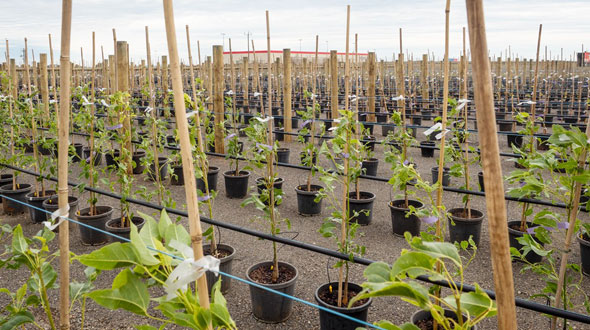
Article supplied by Avalon Airport is developing an onsite nursery, with 4,500sqm now teeming with young trees.

Much has been made of the new check in space and processes that Avalon Airport has been innovating and upgrading across the Covid-19 period. New technology such as touchless kiosks, new auto bag drops and a state of the art CT scanner have been installed, creating a larger, safer space and a simpler, more seamless passenger experience.

What’s less known is that the airport has also been using the time to plan and now implement a new nursery in order to address both aesthetic and environmental needs.

The extensive airport entry and exit roads require trees. As well as beautification, lining the roads with trees provides a wind buffer for passengers, protects against soil erosion, and creates a clear way-finding system.

Installing fully grown trees can be a risky and costly exercise, particularly if the trees don’t take once they’ve been planted.

Creating a nursery addresses both issues simultaneously.

Saplings are of course far cheaper than full grown trees, an important consideration when requiring over 2,000 of them.

They are also more likely to thrive if established within their final environment, becoming accustomed to the exposure instead of being shocked by it if imported fully grown.

And if one or more of the trees doesn’t survive as a young plant then replacement is more cost effective.

Avalon Airport CEO Justin Giddings says, “We’re pleased to be establishing such a large area for Avalon Airport Nursery. We have a history of planting trees onsite, having planted around 200,000 in and around the airport since 2000 as part of Avalon Landcare. It’s great to be doing so again in such a prominent spot with the purpose of using the trees. We can’t wait for them to develop and be replanted in their final positions around the airport.”

Avalon Airport Nursery covers some 4,500sqm and contains around 2,600 plants. The bare rooted pot stock is a mix of native and international trees that thrive in the climate, and includes wattles, kurrajong trees, tea trees and banksias as well as the brilliant maidenhair and the beloved blue jacaranda.

Once the trees are more established the airport plans to convert space in the vicinity into a staff garden and picnic area, and eventually hopes to wholesale.
AOPA Australia Submission: Removal of anti-competitive regulatory restrictions on flight training

Article: AOPA Australia The Aircraft Owners and Pilots Association of Australia this past week met with CASA CEO Ms Pip Spence, calling for the removal of anti-competitive regulatory restrictions, that are driving decline in general aviation flight training.

Article: AOPA Australia The Aircraft Owners and Pilots Association of Australia this past week met with CASA CEO Ms Pip Spence, calling for the removal of anti-competitive regulatory restrictions, that are driving decline in general aviation flight training.

The AOPA Australia Submission is based on the COAG’s Competition Principles Agreement that have not been applied to aviation regulatory development since 2003.  AOPA Australia asserts that anti-competitive aviation regulations have been created since 2003 that have restricted safe competitive growth of small businesses by removing safe competitive regulations consistent to the Chicago Convention Annexes as implemented by the USA’s Federal Aviation Regulations. NZ has adopted the FARs and NZ small aviation and manufacturing are much healthier than Australia’s small civil aviation sectors.

Click to download a PDF Copy of the AOPA Australia Submission

Article written by Benjamin Morgan – AOPA Australia

Outback vaccinations underway

RFDS vaccinations underway

Article supplied by RFDS.

Government and outback communities placing trust in RFDS to quell pandemic

On 28 May 2021, the Federal government announced a partnership with the Royal Flying Doctor Service for the Covid-19 vaccination roll-out to remote communities across Australia.  

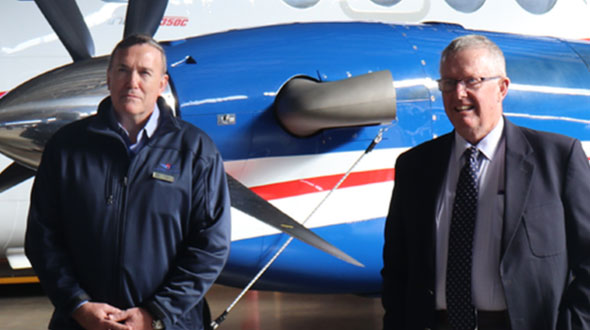
South Eastern Section CEO Greg Sam and the RFDS of Australia Executive Director Frank Quinlan joined Michael McCormack (then Deputy Prime Minister) and Regional Health Minister Mark Coulton at our Dubbo Base to tell the press. 

It’s estimated that 30,000 people will be vaccinated under the program. “Rural communities are seeking to be vaccinated as a priority,” said Mr. Sam. “They are doing their bit for national herd immunity.”

Minister Coulton said the partnership with the RFDS means remote communities can be confident they’ll get vaccinated against Covid-19. “From the outset of this pandemic, the RFDS has provided retrievals, evacuations, swab transfers, and fly-in GP respiratory clinics, protecting the lives of people living and working in the most remote corners of the country,” he said. 

“Nobody knows remote communities like the RFDS, and it makes sense for the Government to utilise their capacity and knowledge to ensure all Australians are protected against this global pandemic.” 

Since the beginning of the pandemic, around Australia the RFDS has conducted 189 Respiratory Clinics in remote areas and seen 391 patients.

Residents in and around Broken Hill have also been able to get the jab at the Clive Bishop Medical Centre at our Broken Hill Base since Easter. 

The South Eastern Section is now planning ahead to start vaccinations at several remote locations in remote NSW and beyond, in coordination with the State and Federal governments, Primary Health Networks, Local Health Districts and local GPs.

COVID launch

Left to right: RFDS Executive Director Frank Quinlan, RFDSSE Chief Executive Officer Greg Sam, Regional Health Minister Mark Coulton, and former Deputy Prime Minister Michael McCormack at the Dubbo base

Message from the President, Royal Flying Doctor Service (South Eastern Section)

message from President of RFDS

Article supplied by RFDS. I hope this finds you well in these strange and testing times. Restrictions on international travel have seen increased domestic travel throughout our region since COVID-19 emerged, but then restrictions to travel relating to hotspots in Melbourne, and more recently, Sydney, have then limited travel around Australia.

Alex Scamps
Alex Scamps: President, Royal Flying Doctor Service (South Eastern Section)

I know that this has been a very challenging time for families with school holiday plans, and for people in our regional and remote communities, who have often had to cancel plans which promised the the opportunity to see loved onces who live far away.  

While we can count our blessings that the pandemic has not reached the serious fatality levels we have seen in countries such as India and the USA, it can be very hard on the spirit, and a test of our resilience to deal with constant change and uncertainty. 

The sooner we are all immunised against COVID-19, the better. The Flying Doctor is proud to be delivering the vaccine to our rural and remote communities, and is commited to giving everyone the opportunity to be immunised. Our frontline teams have been travelling to even the smallest communities, and doing everything they can to reach everyone. I want to thank these committed and hard-working members of our team, and to all those who support them, including you. It is important to note that this COVID response, along with respiratory clinics, is work over and above the every day work of the service, including attending to emergencies in remote areas, getting GPs out to remote clinics, and ensuring quality dental care is regularly available.

This is the reason you are so important to us. You make it possible for us to deliver this life-saving care. I know that our outback communities truly value you, and the support you give to the Flying Doctor. 

No matter that happens in the months ahead, we will be at the service of regional, rural and remote Australians. Thank you for being by our side, and making our work possible. 

Warm regards, 
Alex Scamps
President, Royal Flying Doctor Service (South Eastern Section)

Drone registration levy introduced

RPAS

This article is supplied by CASA.

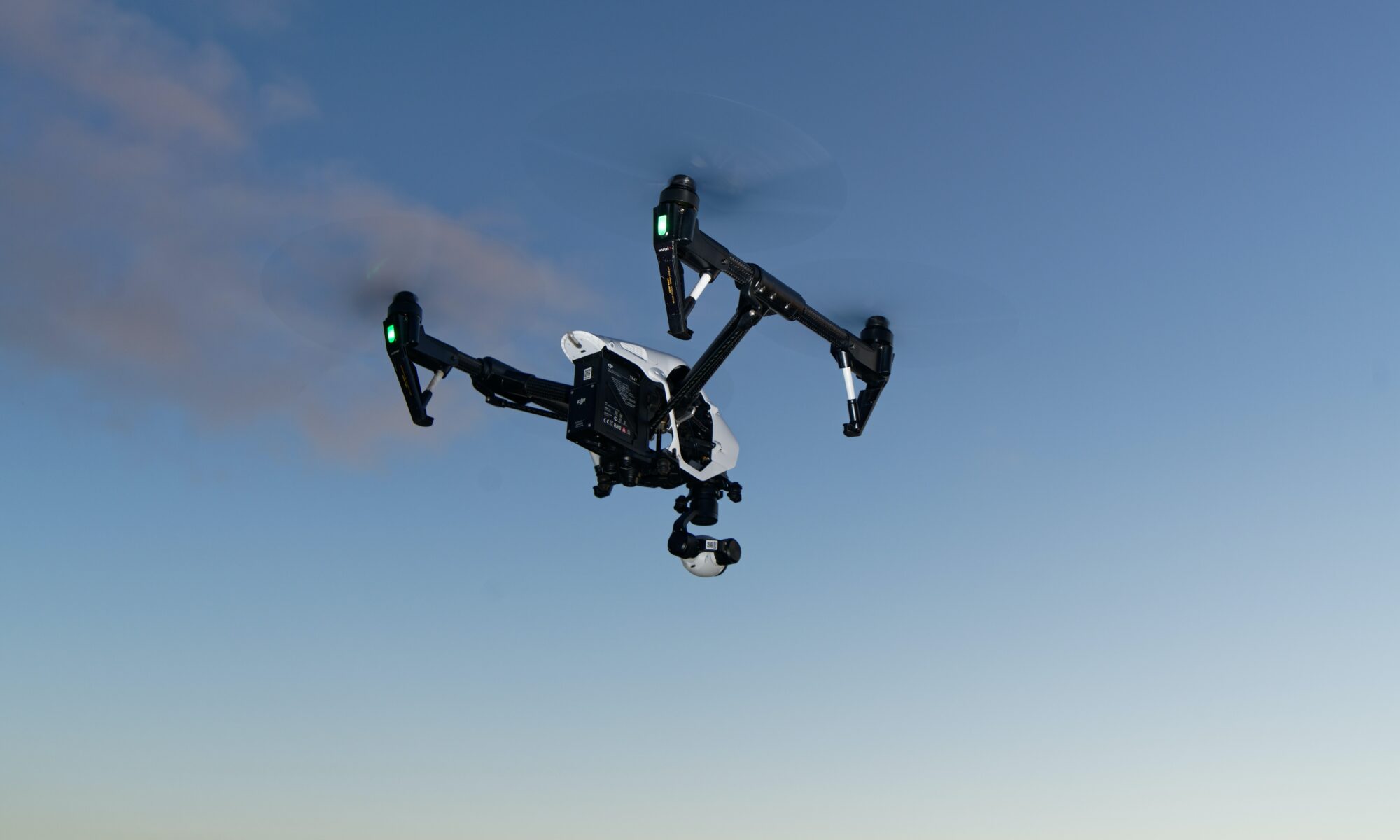
The Australian Government recently announced the introduction of an annual drone registration levy for some commercially operated drones.

Commercial drone registration was introduced on 30 September 2020 and became mandatory on 28 January 2021.

The new drone registration levy only applies to drones flown for business or on behalf of an employer.

For drones, weighing:

  • 500 g or less, it’s free 
  • more than 500 g, an annual registration levy of $40 per drone applies.

The registration levy applies to drones registered on or after 28 July 2021.

For drones registered prior to 28 July 2021, there will continue to be no charge for the registration term. Registration is valid for 12-months.

For more information, go to Register your drone.

RFDS COVID19 Responding to Need

Article supplied by the Royal Flying Doctor Service

As the Delta strain of COVID-19 causing troubles for states across Australia, the RFDS continues to be respond as part of the national health service.

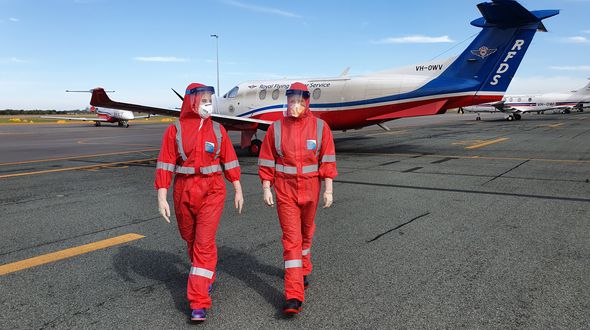
Since the beginning of the COVID pandemic, the RFDS has conducted 3,095 patient episodes of care for confirmed or high suspected COVID-19 — transporting people who have confirmed or highly suspect of having COVID-19.

Over the same period the RFDS has conducted 191 Respiratory Clinics in remote areas, where we have seen 393 patients.

With funding from the Commonwealth government, and in close coordination with Aboriginal Medical Services, Primary Health Networks, Local Hospital Districts and State governments, the RFDS is running a community-led vaccination program to isolated and remote communities across Australia.

To date 5,122 vaccinations have been given in remote communities such as Tibooburra, Eucla, Rawlinna, Forest Airport, Yowah, Jundah, Birdsville, Eulo, Windorah, Stonehenge, Yaraka, Pentland, Greenvale, Ravenswood, Einasleigh, Mount Surprise, Eromanga, Urandangi, Dajarra, Glendambo, Kingoonya, Commonwealth Hill, Innaminka and Timber Creek. About 45% of these vaccinations are Aboriginal and/or Torres Strait Islander Australians.

The RFDS is also assisting state vaccination programs by facilitating the delivery of vaccines or transporting clinical staff from state health teams, such as Kangaroo Island in South Australia.

Between July and December 2021 there are more than 600 vaccination clinic days scheduled, across 152 different remote communities. We are expecting to vaccinate over 50,000 remote Australians by the end of the year, however aiming for 80,000, as communicated by the Prime Minister.

If you have questions about what the Corona Virus COVID-19 is, what the symptoms are, how it spreads, or what local state restrictions mean for you personally, you can learn more at the Department of Health website and Healthdirect Australia website.  The Healthdirect Australia Pregnancy, Birth and Baby website also includes COVID-19 information for pregnancy and parenting and their Maternal Child Health Nurses are equipped for COVID-19 questions from anxious parents, via video call or phone 1800 882 436.

If you are unsure on what COVID restrictions are in your state or territory, you can get the latest information using the COVID Restriction Checker to find out what you can or can’t do.

The RFDS has factsheets on prevention, symptoms and what to do if you feel you may have COVID-19. These can be downloaded below.

To read the full article view here

Avalon Airport – latest COVID lockdown

Article supplied by Avalon Airport: As we head into the weekend of this latest lockdown, as usual we’re making the health of our passengers and staff our priority.

If you’re at the airport please ensure you check in, wear your face mask correctly at all times, use the sanitiser provided, and please have patience with processes that may take a little longer than usual.

Be well, stay safe and we can’t wait to see you all soon.

Click for information around Covid-19 measures at the airport plus useful links: https://www.avalonairport.com.au/covid-19-health-information

Safe integration of RPAS into Australian skies

RPAS

Article supplied by CASA.GOV.AU

10 March 2021

Acting director of aviation safety Graeme Crawford and remotely piloted aircraft systems (RPAS) branch manager Luke Gumley have announced several new initiatives that CASA will deliver to help ensure the safe integration of RPAS into Australian skies.

The announcements took place at the Australian Association for Unmanned Systems’ annual conference in Canberra and included:

To keep up to date with the latest drone information and updates subscribe to our mailing list.